
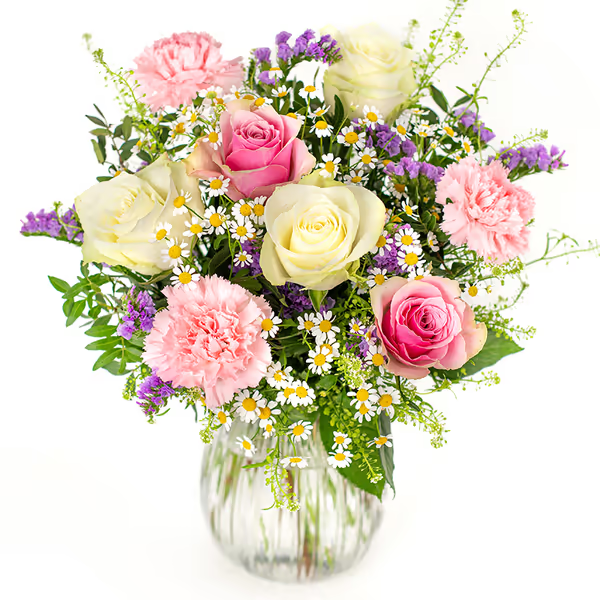
Honey & Lilac
Pistachio: The Subtle Bloomer of Prosperity and Patience
The pistachio tree (Pistacia vera) is best known for its delicious, buttery nuts—but before harvest, it puts on a modest floral display of tiny, clustered, red or greenish flowers. Native to Central Asia and the Middle East, this deciduous tree has been cultivated for over 3,000 years and symbolises abundance, resilience, wisdom, and patience. While not a typical cut flower, pistachio branches and foliage are sometimes used in floral design for their silvery tone and structural beauty.


COMMON NAME
Pistachio

BOTANICAL NAME
Pistacia vera

ORIGIN
Central Asia, Middle East

PEOPLE ALSO CALL IT
Green Almond Tree, Pistachio Nut Tree

FLOWERING TIME
Spring (March to May)

ASPECT
Full sun, hot dry climates, well-drained soil

SYMBOLISM
Prosperity, patience, wisdom, abundance, fertility
Care Tips for Pistachio in the Garden or Pot
Light: Needs full sun—at least 6–8 hours daily.
Soil: Thrives in well-drained, sandy or loamy soil, tolerant of poor soil conditions.
Watering: Drought-tolerant once established; water deeply but infrequently.
Pruning: Prune in winter to shape and remove dead wood.
Fertilisation: Apply low-nitrogen fertiliser in early spring.
Pollination: Pistachios are dioecious—you’ll need both a male and female tree for nut production.
Container growing: Only dwarf varieties; needs large pot, full sun, and winter protection in cooler climates.
Symbolism & Meaning
The pistachio tree is a symbol of abundance, endurance, and patience—since it takes up to 7 years to bear fruit, it's associated with delayed rewards and prosperity. In ancient Persia, it was regarded as a sacred tree, and the pistachio nut is still seen as a token of wealth and good fortune in many Middle Eastern cultures.
Pistachio Twigs in Floristry
The above picture presents a branch of Pistacia vera — the type most commonly used in floristry as a bouquet filler.
The characteristic features visible in the photo that confirm the identification:
Leaves — pinnate, compound, with 5–7 pairs of elongated leaflets on each stem. The leaflets are small, oval, and an intense green with a slight sheen.
Stem — thin, woody, brown, with a natural branching structure in the upper part — typical of pistachio branches cut for floristry use.
Overall character — light, airy, naturally "undone" — this is precisely the quality that makes pistachio branches so valued by florists. They add lightness and movement to arrangements without overwhelming the bouquet.