
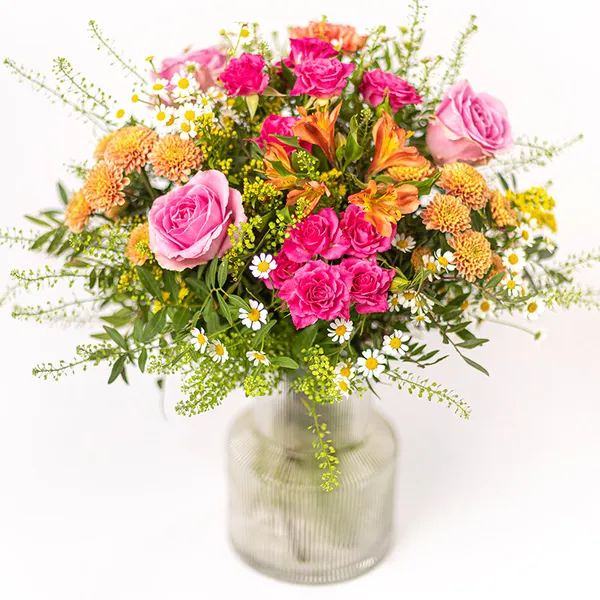
The Playful One
Asters: The Starry Blooms of Late Summer
Asters are charming, daisy-like flowers known for their star-shaped petals and vibrant late-season colours. Blooming when most summer flowers begin to fade, they symbolise love, wisdom, patience, and remembrance. Their name comes from the Greek word “aster”, meaning “star”, reflecting their radiant shape. Native to Europe and North America, asters are beloved in both gardens and bouquets for their ability to attract pollinators like bees and butterflies, while adding a soft, romantic touch to any arrangement.


COMMON NAME
Aster

BOTANICAL NAME
Aster spp. / Symphyotrichum spp.

ORIGIN
Europe, North America

PEOPLE ALSO CALL IT
Michaelmas Daisy

FLOWERING TIME
Late summer to autumn (August to October)

ASPECT
Full sun to light shade

SYMBOLISM
Love, wisdom, faith, remembrance, patience
Care Tips for Cut Asters in a Vase
Trim stems at an angle: Re-cut the stems diagonally to allow better water uptake.
Remove lower leaves: Strip off leaves below the waterline to avoid rot.
Use clean water and flower food: Refresh the water every 2-3 days and add floral preservative to extend vase life.
Keep cool: Place asters away from heat sources and direct sunlight to keep them fresh longer.
Remove wilted flowers: This encourages the remaining blooms to last longer.
Care Tips for Asters in a Pot
Light requirements: Asters prefer full sun but can tolerate light shade.
Watering: Keep the soil evenly moist, especially during flowering, but avoid waterlogging.
Soil and drainage: Use well-draining soil enriched with compost.
Fertilisation: Feed monthly with a balanced fertiliser during the growing season.
Deadheading: Remove faded flowers to encourage more blooms and prevent self-seeding.
Symbolism & Meaning
Asters are rich in symbolism. They represent deep love and affection, but also patience and remembrance, making them meaningful flowers for both celebrations and moments of reflection. In ancient times, asters were believed to ward off evil and were burnt as incense. Today, they’re often used in sympathy bouquets or given as gestures of gentle admiration. The aster is also the birth flower for September, symbolising wisdom and faith.
Types of Asters
There are many varieties of asters, ranging from compact, bushy plants to tall, airy stems. The most popular garden types include New England Asters (Symphyotrichum novae-angliae) and New York Asters (Symphyotrichum novi-belgii), both prized for their rich purple, pink, and blue hues. China Asters (Callistephus chinensis) offer a more formal bloom, resembling chrysanthemums and available in a wide colour range. Whether wild and whimsical or refined and structured, asters bring a soft elegance to borders, containers, and bouquets.